Laser & Sclerotherapy
Leg Vein Treatment
Sclerotherapy and vascular laser for spider veins.
Piece · 011
Overview
What leg vein treatment does, in plain language.
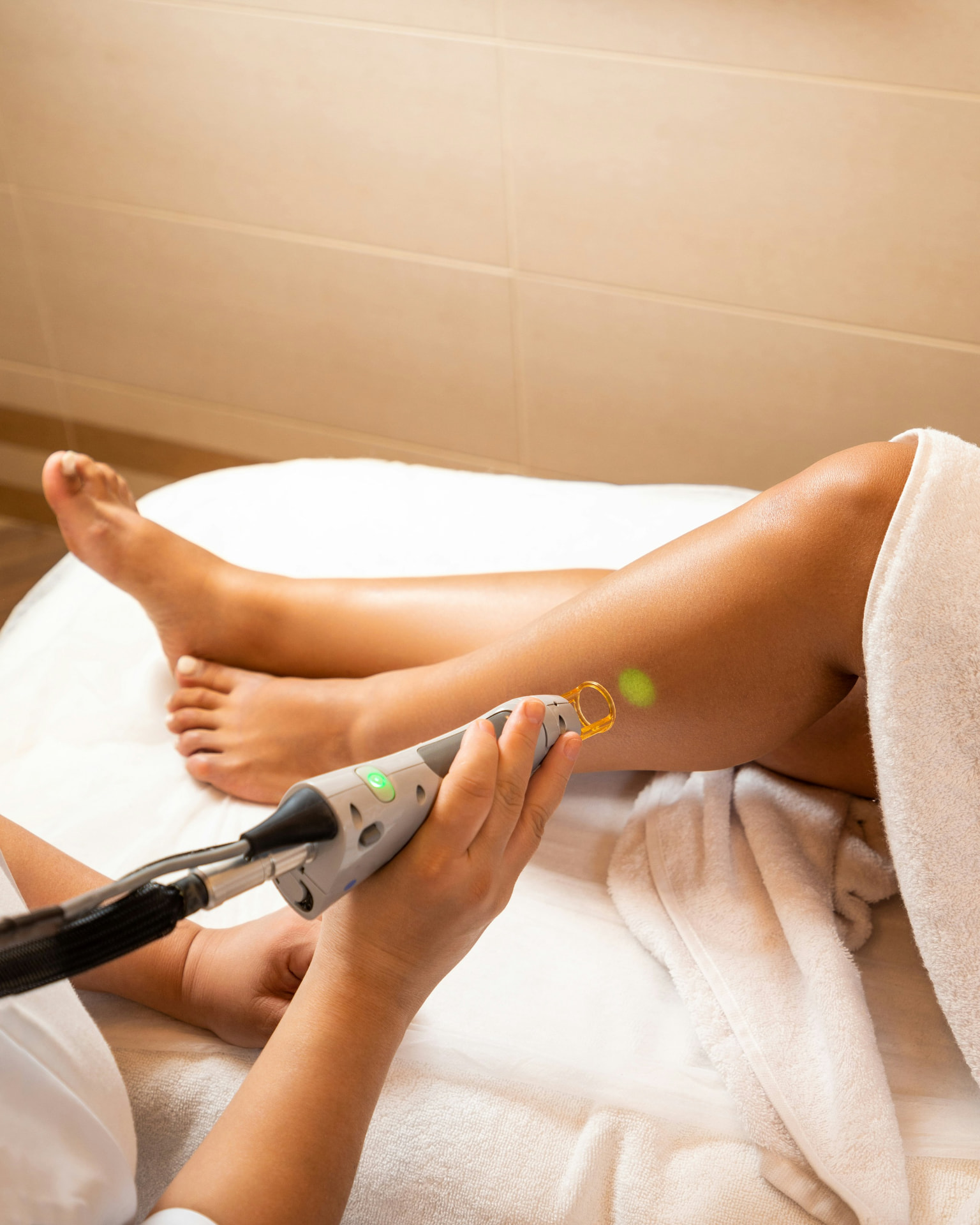
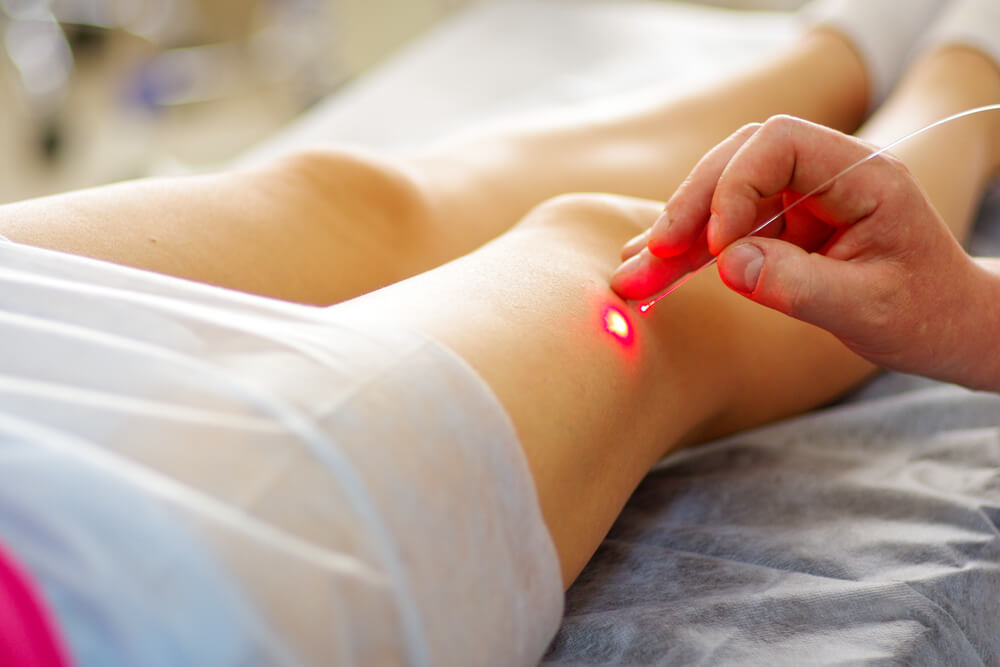
Spider and reticular veins on the legs respond best to a combined approach. Sclerotherapy — a small injection of a specialized solution — closes the feeding network. Vascular laser cleans up surface vessels that don't respond to injection.
The plan is tailored leg by leg. Some patients need one modality, some need both, some need a series.
Larger varicose veins require ultrasound evaluation and may need a different approach; we refer thoughtfully when indicated.
A consultation determines whether this treatment is right for you — every plan begins with a conversation and a physician assessment.
What it treats
- —Spider veins on thighs, knees, and lower legs
- —Reticular (bluish) feeder veins
- —Small facial and body vessels not suited to laser
Includes
- — Spider and reticular veins
- — In-office
- — Compression aftercare
The visit
In the chair.
- Duration
- 30–45 minutes.
- Comfort
- The injection sensation is a brief sting; no anesthesia is needed.
- What it feels like
- You lie flat while veins are injected in sequence. Compression stockings go on before you leave.
Results & downtime
Honest timelines.
- When results appear
- Improvement over 4–8 weeks; some veins clear faster than others.
- How long they last
- Treated veins are gone; new veins can form over time.
- Downtime
- Minimal — bruising and mild tenderness for a week. Walking is encouraged.
- Sessions
- 1–3 sessions per area, spaced 4–8 weeks apart.
Aftercare
Simple steps that protect the result.
- —Compression stockings for the recommended interval — this matters.
- —Walk daily; avoid prolonged sitting or standing.
- —No hot baths, saunas, or intense workouts for 48 hours.
- —Sun protection on any darker spots that appear during clearance.
Good to know